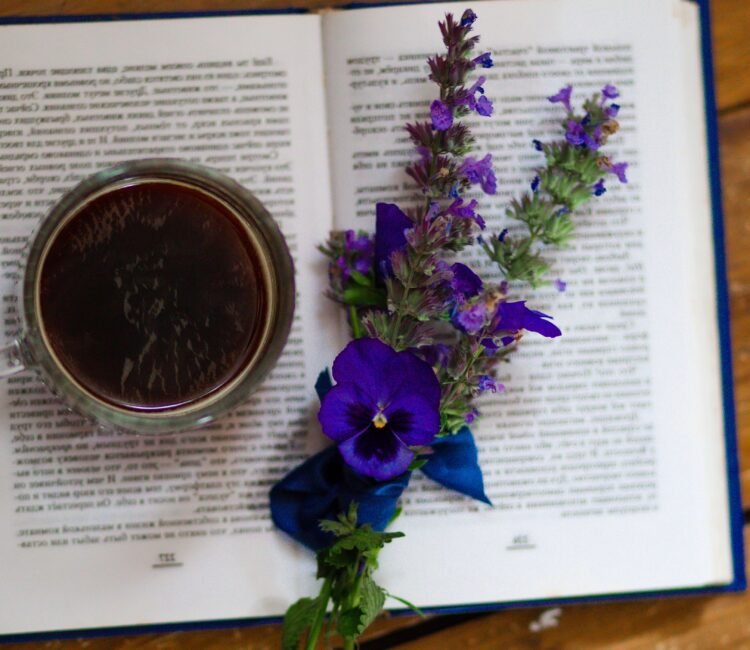
Before starting my Clinical Herbalism degree, I thought I had a fairly realistic idea of what to expect.
After completing a Biomedical Science degree, I already understood the rhythm of higher education. Long reading lists, coursework deadlines, late-night revision sessions fuelled by tea and determination… none of that felt particularly unfamiliar. And when it came to herbalism itself, I expected to learn about plants, physiology, traditional medicine, and holistic approaches to health.
What I didn’t fully understand was the sheer intensity, complexity, and responsibility behind becoming a practising Clinical Herbalist.
There seems to be a common misconception that studying herbalism is simply learning about herbs and making natural remedies. A peaceful, plant-filled degree spent blending remedies and wandering through gardens with a notebook in hand.
And while there certainly are moments of beauty woven throughout the course, the reality is far more demanding.
Clinical herbalism sits at the intersection of traditional plant knowledge and modern clinical understanding. It requires not only an understanding of herbs themselves, but of the human body. We study Anatomy & Physiology, Materia Medica, Botany, Chemistry, Law & Ethics, and much more alongside the practical applications of herbal medicine.
It isn’t enough to know that a herb “works.” We need to understand why it works, how it works, when it should or should not be used, how it interacts with medications or supplements, and whether it is appropriate for a particular individual.
The deeper I move into the course, the more I realise how much responsibility sits behind the role of a Clinical Herbalist.
Ironically, we only had two exams this year, but the amount of work surrounding them felt almost crushing at times. During my Biomedical Science degree, most coursework was usually completed by April half-term. This course, however, simply keeps going. Even after exams, there are still multiple assignments left to complete before the end of the academic year.
At first, I found myself wondering why the workload felt so relentless.
Now, I understand.
This profession asks for an enormous amount of knowledge because people place their health, trust, and vulnerability into the hands of practitioners. The learning cannot stop at graduation. In many ways, graduation feels less like an ending and more like the beginning of lifelong study.
And honestly, I respect that deeply.
Outside of university itself, life has also continued moving at full speed. Alongside revision and coursework, I started a new job while also navigating fluctuating health over the past few months. Returning to university after time away comes with its own adjustment period too. You have to relearn how to study, how to manage the mental load, how to balance work, deadlines, responsibilities, and basic self-care without completely burning yourself out in the process.
Some days, it genuinely felt difficult to make information stay in my brain at all.
Materia Medica especially felt like learning an entirely new language. Technical terminology, Latin plant names, botanical families, constituents, actions, indications, chemistry… for months it felt like my brain politely refused to organise any of it into something coherent.
Then suddenly, about a week before exams, something shifted.
The structure began to appear. Connections formed. Topics that once felt impossible slowly started clicking into place. Even now, I still double-check myself constantly to make sure I have the correct plant in mind, but that small sense of familiarity growing over time feels incredibly rewarding.
There is something strangely satisfying about realising you can finally recognise a Latin name without panic.
I think one of the biggest things this course has changed is the way I view health itself.
I have always believed there was more to wellbeing than simply suppressing symptoms, but studying herbalism has deepened that understanding in ways I didn’t fully expect. The body no longer feels like separate systems loosely stitched together. Everything feels interconnected. Stress affects digestion. Sleep affects hormones. Emotions affect physical health. Nutrition, environment, nervous system regulation, lifestyle, movement, and community all play a role in wellbeing.
The holistic perspective no longer feels abstract to me. It feels deeply practical.
One of the most valuable lessons this course has reinforced is that good healthcare is rarely about choosing one approach and rejecting another.
The deeper I move into clinical herbalism, the more I appreciate that herbal medicine and conventional medicine each have their strengths, limitations, and appropriate applications. There are situations where modern medical intervention is essential, and there are situations where herbal medicine can offer meaningful support. Often, the best outcomes come from understanding how these approaches can work alongside one another, rather than viewing them as competing philosophies.
This perspective has also deepened my appreciation for patient safety and critical thinking. Herbalism is not about finding a magical cure hidden in a plant, nor is it about rejecting conventional healthcare. It is about understanding the individual in front of you, recognising the complexity of their circumstances, and using the tools available in a thoughtful, responsible, and evidence-informed way.
Ultimately, the goal is not to defend a particular system of medicine. The goal is to help people as safely and effectively as possible.
And despite how exhausting this year has been at times, these exams reassured me of something important:
I am on the right path.
There were moments during revision where I felt overwhelmed, discouraged, and completely mentally drained. But underneath all of that, there was still excitement. Still curiosity. Still a genuine love for learning all of this.
Next year we begin clinical hours, and honestly, I cannot wait.
The thought of finally bringing theory and practice together feels both exciting and terrifying in equal measure, but mostly exciting. I know there is still an enormous amount left to learn, and I suspect that feeling never truly disappears in this field.
But before that, July is calling.
While there is plenty of reading, revision, and preparation to do before Year 2 begins, I think my brain is in desperate need of a little decompression after the intensity of the past year. A short break feels well earned, and I am looking forward to stepping away from deadlines for a little while, spending time outdoors, reconnecting with the plants themselves, and allowing everything I’ve learned this year to settle.
Perhaps that is part of learning too.
Not just absorbing information, but giving ourselves the space to process it.
But maybe that is part of what makes herbalism so meaningful.
It is not static knowledge. It is living knowledge. Constantly growing, adapting, deepening, and asking us to stay curious.
So yes, I am tired. Slightly overwhelmed. Still surrounded by coursework and revision notes.
But more certain than ever that this is exactly where I am supposed to be 🌿
~Herbata Haven 💜
STAY CONNECTED WITH NATURE
“In every leaf, a remedy. In every remedy, a story.” 🌿
LEAVE YOUR COMMENT
Your email address will not be published. Required fields are marked *